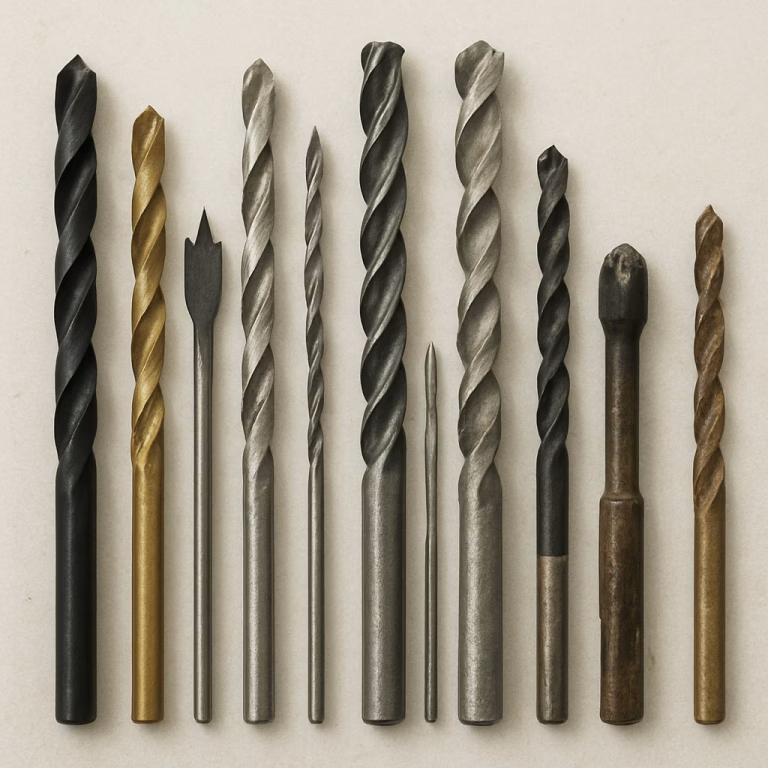



When it comes to DIY projects or professional woodworking, the significance of choosing the right tool for the job cannot be overstated. Among these essential tools are twist drill bits, whose seemingly simple design masks a complexity that can baffle even the most seasoned handyman. It’s not just about having a drill bit; it’s about having the correct one. And with a vast array of twist drill bit sizes available in the market, this can easily become an overwhelming task. Each size serves a distinct purpose, ensuring precision and efficiency in every task. Understanding these sizes can transform your approach to drilling, saving you time, effort, and materials.
Imagine embarking on a home improvement project only to find your work marred by imperfections because you used the wrong drill bit size. Frustrating, right? This blog post will guide you through the maze of twist drill bit sizes, shedding light on their specific applications and how to select the right one for your needs. Whether you’re drilling into wood, metal, or plastic, knowing your twist drill bit sizes can make all the difference. Let’s delve deeper into this topic so you can tackle your next project with confidence and precision.

Understanding Twist Drill Bit Sizes
Twist drill bit sizes are more than simple measurements; they represent standards that ensure compatibility and accuracy across various materials. These sizes are defined in several systems—imperial (fractional inches), metric (millimeters), number gauges, and letter gauges. Each system has its own scale, making it critical to understand how to read and convert between them. For instance, a 1/4″ bit in fractional size is roughly equivalent to a 6.35 mm metric bit, but neither matches a #4 or #F in gauge measurements. This diversity allows craftsmen to fine-tune hole diameters precisely for different fasteners and materials.
Beyond the numbering systems, twist drill bit sizes also dictate the bit’s diameter tolerance—how much smaller or larger the actual hole may be compared to its nominal size. High-precision applications, such as metal fabrication or instrument making, demand exact tolerances, while less strict tasks like rough carpentry can accept broader ranges. Manufacturers often mark bits with color codes or etched numbers for quick identification. Familiarity with these markings and the corresponding standards will help you select the exact twist drill bit sizes needed for your project, avoiding costly trial and error.
Common Sizes for Wood Drilling
When drilling wood, choosing the correct twist drill bit sizes helps prevent tear-out, splitting, and oversized holes. For softwoods and hardwoods alike, the most commonly used sizes range from 1/16″ (1.6 mm) for pilot holes in small screws up to 1/2″ (12.7 mm) for larger dowels and bolts. Intermediate sizes—such as 3/32″, 1/8″, 5/32″, and 3/16″—cover most general carpentry and DIY needs. Selecting a bit about 1–2 sizes smaller than the screw diameter ensures a snug fit for wood screws, improving holding power without splitting the grain.
In fine woodworking, precision is paramount. For dowels and tenons, drill to the exact diameter of the rod or tenon to achieve a tight, flush fit. Spade bits and auger bits sometimes complement twist bits for larger holes, but twist drill bit sizes remain versatile for pilot holes and clean, accurate entry points. To avoid blowout on the exit side, always drill from the good face or use a backing block. By understanding the most common twist drill bit sizes for wood, you can execute joinery and hardware installation with confidence.
Common Sizes for Metal Drilling
Drilling metal requires different considerations than wood, notably speed, lubrication, and bit composition. High-speed steel (HSS) and cobalt-alloy twist drill bits are standard for materials like mild steel, stainless steel, and cast iron. Common twist drill bit sizes for metal drilling often start around #1 (0.228″/5.79 mm) and extend down to specialized number gauges such as #60 (0.040″/1.02 mm) for pilot or precision work. Fractional and metric bits—ranging from 1 mm up to 13 mm or 1/2″ and above—are also prevalent, depending on the application.
For tapping and threaded holes, it’s critical to drill to the correct size—often a few thousandths of an inch smaller than the nominal thread diameter. For example, a 1/4″–20 UNC thread requires a 7/32″ (0.2188″/5.56 mm) drill. Using twist drill bit sizes that strictly adhere to tap drill charts ensures proper thread engagement and reduces the risk of stripped holes. Additionally, proper chip evacuation and consistent feed pressure will extend bit life and maintain precision.
Common Sizes for Plastic Drilling
Drilling plastics presents unique challenges such as melting, chipping, and cracking if performed too quickly or with improper bit geometries. Standard twist drill bit sizes for plastics mirror those used for wood and metal—fractions, metric, and gauges between 1 mm and 12 mm (or 1/16″ to 1/2″) cover most hobby and industrial applications. However, bits with a 60–80° point angle and a polished flute help reduce friction and heat buildup, preventing the plastic from melting into the cut.
Because plastics vary widely in hardness—from acrylic and polycarbonate to PVC and polyethylene—adjusting speed and feed is crucial. Slower spindle speeds and light pressure allow the chip to clear efficiently. When precision is essential, pilot holes drilled with smaller twist drill bit sizes (e.g., #70 or 0.026″/0.66 mm) guide the final bit and prevent walking. Always support thin or flexible parts to avoid vibration-induced tear-out. By selecting the right twist drill bit sizes and parameters, you’ll achieve clean, accurate holes in plastic components.
Drill Bit Size Conversion Chart
Converting between fractional, metric, and gauge systems simplifies tool selection and ensures compatibility with fasteners and fixtures. While visual charts are handy in shops, knowing a handful of common equivalencies can speed the process. For example, 1/16″ equals 1.5875 mm, and 5 mm matches roughly 13/64″ (0.203″). Being comfortable with these conversions helps prevent ordering mistakes and allows quick bit changes on the fly.
Below are some key conversions to reference:
- 1/16″ = 1.5875 mm
- 5 mm ≈ 13/64″ (0.203″)
- #7 gauge = 0.201″ (5.11 mm)
- 3/16″ = 4.7625 mm
- 6 mm ≈ 15/64″ (0.236″)
- #10 gauge = 0.1935″ (4.91 mm)
For thread-drilling and specialty applications, refer to comprehensive conversion tables that span from #80 (0.0135″/0.34 mm) up through large fractional sizes. Many machining handbooks and manufacturer catalogs include full drill bit size charts to ensure you always have the correct twist drill bit sizes at your fingertips.
Conclusion: Mastering Twist Drill Bit Sizes for Precision Drilling
By understanding the range of twist drill bit sizes, from fractional and metric to number and letter gauges, you’ll be equipped to select the perfect bit for wood, metal, or plastic tasks. Familiarity with common sizes and conversions reduces errors, saves time, and enhances the quality of your work.
Armed with these insights and practical tips, you can confidently tackle any drilling project with the precision and efficiency that professional and DIY enthusiasts alike demand. Mastering twist drill bit sizes is an investment in your craft—one that pays dividends in performance and reliability.